Be yourself; Everyone else is already taken.
— Oscar Wilde.
This is the first post on my new blog. I’m just getting this new blog going, so stay tuned for more. Subscribe below to get notified when I post new updates.
Be yourself; Everyone else is already taken.
— Oscar Wilde.
This is the first post on my new blog. I’m just getting this new blog going, so stay tuned for more. Subscribe below to get notified when I post new updates.
Below Die Casting Parts Supplier to talk about the different defects in the current aluminum alloy die castings has always been a difficult point in the die casting production process.
1. How can the air holes stay inside the puppet?
2. What are the problems caused by the stomata in the mouth of the slag pack?
3. How come the size bubbles on the casting surface.
4. Why is it difficult to remove the air holes in the die casting?
Fifth, what is wrong with the main process of producing the separator in the die casting?
6. Why does the die casting part peel? Is it related to the die casting release agent?
7. Why is it difficult to make pure aluminum, and what are the details of the idea?
8. There are bubbles on the surface of zinc alloy castings after plating. Is it a material problem or a mold (machine. Adjustment) problem or a plating factory problem? How can we determine whether it is a material problem-or a die casting process problem-or a mold problem-or electroplating? problem.
9. How can we achieve the surface strength of zinc alloy castings.
10. What kind of release agent is best for zinc and aluminum alloy die castings.
During the forming process of Zinc Alloy Die Cast Part, defects will be caused due to some external factors. Porosity is one of the defects of zinc alloy die castings. It is not only related to the casting process, but also related to the properties of the cast alloy and the alloy. A series of factors such as smelting and the performance of modeling materials are related.
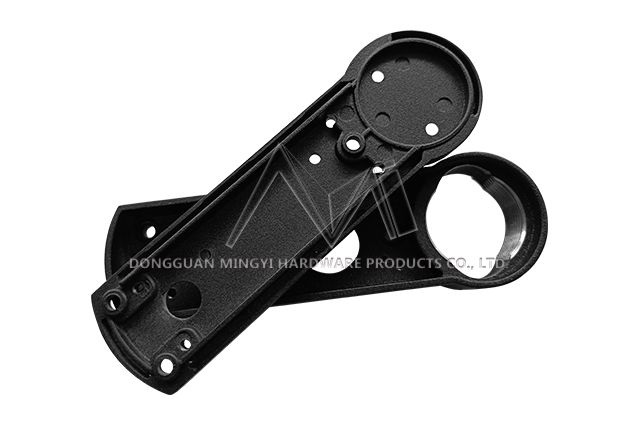
Zinc Alloy Die Cast Part
First of all, it is important to choose the correct model material. If the pouring system adopts the design of a hollow straight runner, the metal liquid can be mechanically blocked by slag and the combing flow can be absorbed to make the filling more stable. The second is about the use of the gating system and the insulation riser. The design of the inner gate should be conducive to the rapid forming of the alloy, avoid the formation of blind spots and hinder the manufacture of castings. Finally, the permeability of the coating is improved. High-quality coatings should have the characteristics of wear resistance, easy brushing, no cracking, strong exhaust ability, good air permeability, non-metallic wetting agent and chemical reaction, and qualified die castings. Without high-quality coatings, the prerequisite for high-quality coatings can achieve subsequent stable development.
Die casting processing is a basic manufacturing process with certain technical requirements. With the advancement of technology, many important tasks have been replaced by machines. Although this raises the threshold for die casting, it also improves the quality and value of die castings. , Doing a good job in die casting processing can bring rich returns to businesses.
Our company provides Zinc Alloy Car Remote Key Accessories, please contact us.
In die castings, due to the special characteristics of die casting, aluminum alloys are formed under high temperature, high speed, and high pressure. Therefore, there are unavoidable holes in the die castings. We collectively call these holes sand holes. This is also the most common quality problem for Aluminum Alloy Die Cast Part.
As an Aluminum Alloy Die Cast Part Factory, share with you the classification and expression of sand holes.
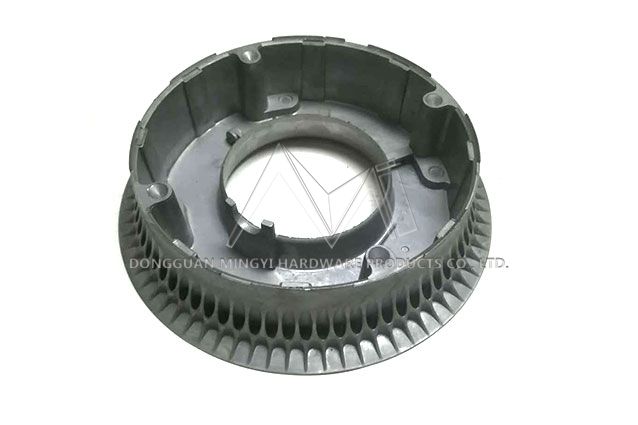
Aluminum Alloy Die Cast Part
1. Stomata: In the process of die-casting, the holes generated due to the complexity of the mold cavity and the control of the production process will exist at any position in the casting, and can be subdivided into entangled pores precipitated pores, and There are three types of invasive stomata, each of which has its own form of expression, which I will explain one by one later.
2. Slag holes: In the process of die-casting, due to the impureness of the aluminum soup or the entry of foreign bodies during the die-casting, the foreign bodies inconsistent with the aluminum alloy body can be clearly seen when dissected.
3. Shrinkage: The hole caused by the shrinkage of the casting exists in the thick part far from the gate or the product. The inner hole is irregular, and the hole wall has a metallic luster and has not been polluted.
Cause Analysis
1. Stomata
(1) Involved stomata
Reason: There will be gas in the mold cavity and the material tube (barrel, melting cup). During high-speed injection, because the gas is too late to be exhausted, it is wrapped by the turbulent aluminum alloy and exists inside the casting to form air holes. : There is pressure inside the pores. If the casting is heated to about 220 degrees, there will be raised bubbles on the surface of the casting. Sometimes the sound of bubbles may be heard when the heating is continued. Contaminated.
Solution
a. Find a way to exhaust the gas existing in the mold cavity and the material tube before die casting. At present, vacuum die casting and oxygen die casting can be used.
b. Write an article on the mold and find a way to exhaust the gas in the mold cavity.
c. The article on the die-casting process is always good. Some equivalent gas exists in a certain part of the casting, and it must be a defective product. We can use the die-casting process to disperse the gas that exists in one place. Divide into several portions to diffuse the stomata.
(2) Precipitated stomata
Reason: When the aluminum alloy is solidified from liquid to solid, the H dissolved in the aluminum alloy will precipitate to form hydrogen, and these hydrogen will remain inside the casting to form holes.
Representation style: Cut-out inspection, smooth inner wall, metallic luster, will exist anywhere in the casting.
Our company also has Magnesium Die Casting Parts on sale, welcome to consult.
As a light engineering metal material, magnesium alloy has high specific strength, specific stiffness, specific elastic modulus, and good castability and cutting performance. Therefore, it is increasingly used in the fields of automobiles, electronics, home appliances, communications, instrumentation, and aerospace, and is known as the green engineering metal structural material of the 21st century. However, magnesium alloys are extremely susceptible to corrosion, which greatly limits their applications. Today China Die Casting parts Factory will tell you, how does magnesium alloy prevent corrosion?
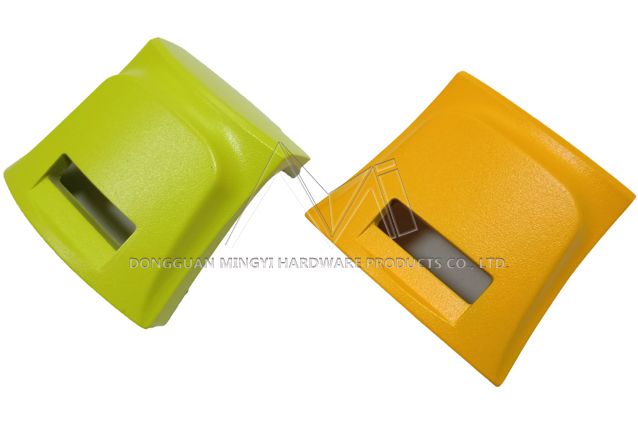
Magnesium Alloy Die Cast Part
Corrosion is the destruction of metals in the surrounding medium due to chemical, electrochemical, or physical dissolution. From an energy point of view, the tendency of metal corrosion can be judged by the amount of energy consumed to smelt the metal from the ore. As a structural material, magnesium alloys are prone to corrosion in the use environment, which greatly limits its practical application.
Main Forms of Magnesium Alloy Die Cast Part Corrosion
1. Galvanic corrosion and general corrosion
The high reactivity of magnesium makes it easy for magnesium to form corrosive cells with other phase structures and galvanic corrosion.
2.Local corrosion
The local corrosion of magnesium alloy is mainly a little bit corroded and filiform. Magnesium is a naturally passivated metal. In a medium containing Cl-, the passivation film of magnesium or magnesium alloy is easily damaged and pitted, and it will also occur in neutral or alkaline salt solutions. Heavy metal contaminants can accelerate the pitting of magnesium alloys.
3.High temperature corrosion
Manufacturers of magnesium alloy die-casting remind that the oxide film on the surface of magnesium alloy has a protective effect in a long time under the dry oxygen of 450 ℃.
4.Corrosion fatigue
Under fatigue loading, the origin of microcracks in magnesium alloys is related to the slip of the preferentially oriented grains. Quasi-cracks often occur at the beginning of fatigue crack growth, which is a characteristic of dense hexagonal crystals. The micro-mechanism of further crack growth can be brittle or ductile, it can be either transgranular or intergranular, depending on the influence of metallurgical structure and environment. Generally lowering the temperature can prolong the crack initiation period and improve the fatigue life of magnesium alloys.
3. Electroplating of magnesium alloys
According to long-term research and practical results, the research and development work of magnesium alloy die casting manufacturers at home and abroad to solve the corrosion problem of magnesium alloys is mainly concentrated in the following three aspects:
1. Improve the corrosion resistance of magnesium alloys through alloying and the use of high-purity alloys;
2. Use a surface treatment or a coating technology to apply a protective coating on the magnesium alloy;
3. Design the continuous structure and assembly method of the alloy to reduce or avoid electrochemical corrosion.
Our company also has Aluminum Alloy Die Cast Part on sale, welcome to consult.
In the usual casting process, there are occasional blackening of aluminum alloy die castings. Why is this? Today, Aluminum Alloy Die Cast Part Factory will come together to understand the cause of this phenomenon.
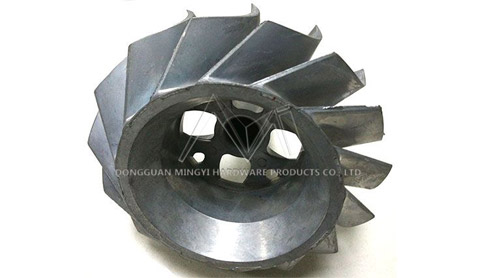
Aluminum Alloy Die Cast Part
1. The process technology is not good. Aluminum alloy die castings are not carefully cleaned or inspected in the later stage, which leads to mold and blackening of the castings.
2. The warehouse was not ready in time. When the aluminum alloy die-casting is placed in a warehouse with different aspect ratios, its moldy condition is also different.
3. Internal reasons for aluminum alloy profiles. Many die-casting companies do not do a little finishing after aluminum die-casting and machine production process procedures, or simple tap water washing, can not guarantee that they are all neatly tidy. Corrosion chemical composition and other impurities, such impurities promote the speed of moldy spot blackening of aluminum alloy die castings.
Last time we talked about some of the reasons why the Aluminum Alloy Die Cast Part turned black. Today we will talk about the other two factors!
1. Environmental requirements for aluminum alloy materials.
Aluminum is a relatively lively metal. It is particularly susceptible to oxidation due to contact with air under limited temperature and ambient humidity conditions, which then causes blackening or mold growth. This is determined by the original characteristics of aluminum.
2. The cleaning agent used is not appropriate.
If the chosen cleaning agent is relatively corrosive, it will cause the die-cast aluminum to attack the air and then oxidize.
There are many die-casting plants that produce aluminum alloy die-casting parts, but ignore these key points to cause the aluminum alloy die-casting parts to turn black. Therefore, only when the relevant storage regulations are properly observed and dried in time, Will reduce the chance of blackening of aluminum alloy die castings.
The use temperature and humidity of aluminum die castings, the medium and sealing conditions of the parts, and then the accuracy requirements and specifications that the whole can meet can be stable.
The precision of the aluminum die casting profile and the roughness of the outside will affect its use of pumps and hydraulic systems, energy consumption and cavitation, the cylinder block and cover of the internal combustion engine, the ring of the piston and the exhaust pipe The hardness of the parts and the resistance to cold and heat will affect the length of the engine.
That’s two other reasons why the aluminum alloy die castings appear black! You can find out.
Our company provides Aluminum Die Casting Service, welcome to consult.
Today Die Casting Parts Supplier explains the important factors of zinc alloy die-casting plating technology:
Since Zinc Alloy Die Cast Part has a series of excellent characteristics such as low density, high specific strength, and corrosion resistance, it will be more widely used in various occupations such as aviation, aerospace, passenger cars, and machinery. Praised by customers. Especially in the car industry, in order to reduce fuel consumption and improve power utilization, it is a long-term development trend to replace steel and aluminum castings with aluminum and nickel alloy castings. In the meantime, emphasis was placed on the pollution-free, high-efficiency, concise operation of refined technology, deterioration technology, grain refinement technology and rapid furnace detection technology.
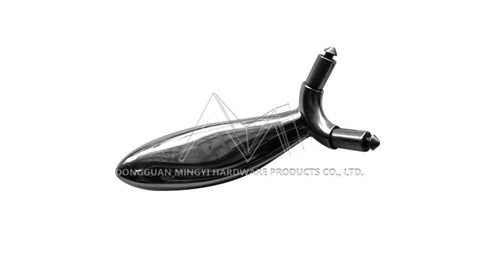
Zinc Alloy Die Cast Part
In order to further the material function and maximize the potential of the material, we can develop high-quality aluminum alloy materials, especially aluminum castings that can meet the functional requirements of different working conditions; strengthen the research of aluminum alloy melting process, continue the aluminum alloy die-casting and kneading casting process and Development and discussion of related technologies, perfect development and discussion of aluminum alloy melting equipment and related technologies and processes.
Zinc alloy die-casting electroplating is the process of plating a thin layer of other metals or alloys on the surface of some metals using the principle of electrolysis. It is a process of using electrolysis to make a metal film adhere to the surface of a metal or other material and then prevent it. Corrosion, improve abrasion resistance, electrical conductivity, reflectivity and enhance beauty.
Elements of electroplating:
1. Cathode: to be plated, refers to various connector terminals.
2. Anode: If it is a soluble anode, it is the metal to be plated. If the anode is not soluble, most are precious metals (platinum, iridium oxide).
3. Electroplating solution: A plating solution containing metal ions to be plated.
4. Electroplating tank: It is an acceptable tank for storing electroplating chemicals. Generally, strength, corrosion resistance and temperature resistance are considered.
5. Rectifier: A device that supplies DC power.
Purpose of electroplating: In addition to being beautiful, electroplating has different purposes according to various electroplating needs.
1. Copper plating: used as a primer to improve the adhesion ability of the electroplating layer and the corrosion ability.
2. Nickel plating: used as a primer or appearance to improve corrosion resistance and abrasion resistance, (chemical nickel is abrasion resistance in modern technology beyond chrome plating)
3. Gold plating: Improve the conductive contact resistance and signal transmission.
4.Palladium-nickel plating: improve the conductive contact resistance, improve signal transmission, better wear resistance than gold. 5. Tin-lead plating: Promote soldering ability and be replaced by other substitutes (because most of the lead is now changed to bright tin plating and matte tin).
Our company also has Magnesium Die Casting Parts on sale, welcome to consult.
As a Die Casting Parts Supplier, share with you the difference between magnesium alloy die casting and casting.
According to the pouring process of molten metal, casting can be divided into gravity casting and pressure casting. Gravity casting refers to the process of injecting molten metal into a mold under the gravity of the earth, also known as casting. In the broad sense, gravity casting includes sand casting, metal casting, investment casting, foam lost foam casting, mud casting, etc. Narrow gravity casting refers to metal casting. Die casting refers to the process of injecting metal liquid into the mold under the action of other external forces (except gravity).
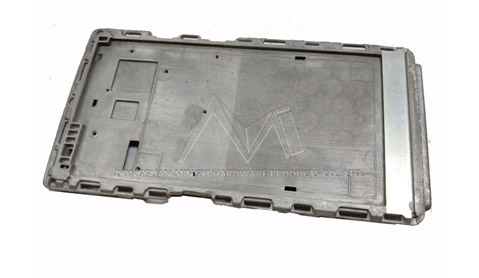
Magnesium Alloy Die Cast Part
In a broad sense, die casting includes die casting and vacuum casting, low pressure casting, centrifugal casting, etc. The narrow meaning of die-casting especially refers to the die-casting of the die-casting machine, which is called die-casting. The precision foundry has long been engaged in gravity casting of sand and metal molds. These types of casting processes are currently the most commonly used processes in non-ferrous metal casting, and their relative prices are also the lowest. Die casting is metal die casting on a die casting machine, which is currently the most productive casting process. Die-casting machines are divided into hot-chamber die-casting machines and cold-chamber die-casting machines. Compared with cold-chamber die-casting machines, hot-chamber die-casting machines have a higher degree of automation, less material loss, and higher production efficiency.
However, due to the heat resistance of mechanical parts, it can only be used to produce castings of low melting materials such as zinc alloys and magnesium alloys. Due to its high melting point, Aluminum Alloy Die Cast Part, which is widely used today, can only be produced on cold-chamber die casting machines. The main feature of die casting is that the metal liquid fills the cavity under high pressure and high speed, and forms and solidifies under high pressure. The disadvantage of die castings is that because metal liquid fills the cavity under high pressure and high speed, it is inevitable that the air in the cavity is wrapped inside the casting to form subcutaneous holes, so the aluminum alloy die casting should not be heat treated. Die castings should not be sprayed on the surface (but they can be sprayed). Otherwise, the internal holes in the casting will expand when heated and cause the casting to deform or blister. In addition, the mechanical cutting machining allowance of the die casting should also be made small, generally about 0.5mm, which can reduce the weight of the casting, reduce the cutting machining amount to reduce costs, and avoid penetrating into the dense surface layer, exposing subcutaneous air holes, resulting in The workpiece is scrapped.
Our company also has Magnesium Alloy Die Cast Part on sale, welcome to consult.
As a China Die Casting Parts Factory, share with you. Conventional overall quenching has been difficult to meet the high surface wear resistance and toughness requirements of the die casting mold.
The surface strengthening treatment can not only improve the wear resistance and other properties of the Die Casting Mould surface, but also can keep the substrate strong enough and toughness, while preventing the molten metal from sticking and etching, which improves the comprehensive performance of the die casting mold and saves alloy elements It is very effective to significantly reduce costs, make full use of the potential of materials, and make better use of new materials.

Magnesium Alloy Die-Casting
Production practice shows that surface strengthening treatment is an important measure to improve the quality of die-casting molds and prolong the service life of the molds. Die-casting mold
1.Carburizing
Carburizing is currently the most widely used chemical heat treatment method in the machinery industry. Its process characteristics are: heating medium-low-high-carbon low-alloy mold steel and medium-high-carbon high-alloy steel mold in a carburizing active medium (carburizing agent), and heating it to 900 ° -930 ° C, so that carbon atoms penetrate into the surface Layer, followed by quenching and low temperature tempering, so that the surface layer and the core of the mold have different compositions, structures and properties.
2.Nitriding
The process of infiltrating nitrogen into the surface of steel is called nitriding of steel. Nitriding can enable mold parts to achieve higher surface hardness, wear resistance, fatigue performance, red hardness and corrosion resistance than carburizing. Because the nitriding temperature is low (500-570 ° C), the deformation of the mold parts after nitriding is small.
Nitriding methods include solid nitriding, liquid nitriding, and gas nitriding. At present, new technologies such as ion nitriding, vacuum nitriding, electrolytic catalytic nitriding, and high-frequency nitriding are being widely used to shorten the nitriding time and obtain a high-quality nitriding layer.
3. Nitrogen and carbonitriding
Nitrogen and carbonitriding is a low-temperature nitrogen and carbonitriding process (530 ° C-580 ° C) in which nitrogen and carbon are simultaneously infiltrated in a medium containing activated carbon and nitrogen atoms. The nitrocarburizing layer has less brittleness, and the nitriding time is much shorter than the nitriding time. After nitrocarburizing, the die-casting mold can significantly improve its thermal fatigue performance.
The harsh working conditions require the die casting mold to have good high temperature mechanical properties, cold and hot fatigue resistance, liquid metal erosion resistance, oxidation resistance and high hardenability and wear resistance. Heat treatment is the main factor determining these properties.
The heat treatment of the die-casting mold is to change the microstructure of the steel, so that the surface of the mold obtains high hardness and wear resistance, while the core still has sufficient strength and toughness, and at the same time effectively prevents molten metal from sticking and eroding. Selecting the right heat treatment process can reduce scrap and significantly increase mold life.
Our company also has Magnesium Alloy Die-Casting on sale, welcome to consult.
As an Aluminum Alloy Die Cast Part Factory, share with you.
In the production process, in order to avoid the defects of aluminum alloy pores, effective measures must be taken to reduce the moisture of the raw materials as much as possible, strengthen the quality management of the smelting, and improve the exhaust energy of the mold. The details are as follows:
The main reason for the pores in the casting is that the aluminum alloy contains excessive H. The hydrogen content accounts for% ~% of the total gas content. The rest is N, O CO, etc., and H is derived from the atmosphere and various metal raw materials and flux And the moisture in the coating is differentiated by heat, and the HO = H + + O-reaction occurs under high-temperature conditions, which is a reversible reaction. The differentiated oxygen easily generates AlO with a higher melting point with the molten metal. The reaction equation is: Al + + O-= AlO. This promotes the high-temperature differentiation of water vapor and the hydrogen ions are continuously dispersed into the alloy liquid.
Hydrogen exists in the aluminum solution in two ways: the first is to differentiate into atomic conditions and dissolve in the aluminum solution, which is called dissolved type, accounting for about%; the second type of hydrogen is adsorbed to the appearance of inclusions in the form of molecular bubbles Or in the gap, it is called adsorption type. Since the solubility of hydrogen in the aluminum alloy liquid increases with temperature, the alloy liquid will absorb a lot of H during the melting process. In the process of crystallization and condensation, due to the temperature drop, the surface layer of the alloy liquid mainly condenses and the viscosity of the alloy increases. Although the decrease in the solubility of hydrogen needs to be separated from the metal liquid, it is now difficult to stay in the alloy liquid. This constitutes a stomata defect. The longer the melting and holding time, the higher the hydrogen content.
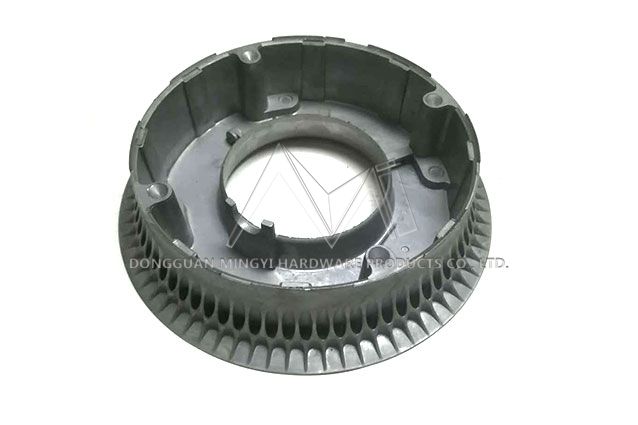
Aluminum Alloy Die Casting
The solubility of tritium hydrogen in the alloy liquid is not only proportional to the temperature, but also proportional to the pressure and the humidity of the air, that is, the partial pressure of hydrogen.
Aluminum alloy elements and their content also have a certain effect on the solubility. When the content of silicon and copper is added, the solubility of hydrogen decreases, and when the content of magnesium is added, the solubility of hydrogen is added. With different aluminum alloy components, the critical content of hydrogen in the alloy liquid is also different. ZL aluminum alloys have the largest hydrogen absorption when they are hypoeutectic aluminum-silicon alloys.
Aluminum Alloy Die Casting is a casting process for high-temperature and high-speed injection of molten aluminum alloy metal liquid into a mold cavity. This casting method is characterized by precise product formation and high production efficiency. However, the conventional die-casting process has defects. Because the gas in the mold cavity cannot be effectively eliminated during high-speed injection, it remains inside the casting, forming porosity defects, resulting in poor mechanical properties of the casting. In order to solve this problem, people use a vacuum method, that is, the gas in the cavity is drawn out during die casting to form a certain vacuum or negative pressure state, thereby reducing the porosity defects in the casting.
Our company also has Zinc Alloy Die-Casting Custom on sale, welcome to consult.
Zinc Alloy Die Cast Part is a precision casting method that uses high pressure to force metal melt into a complicated shape of a metal mold. It is a precision casting method. The characteristics of zinc alloy die-casting technology, how to choose the correct process parameters is the decisive factor to obtain high-quality zinc alloy die-casting molds. It is correct. The premise of adjusting the process parameter selection, so how to design the mold is essentially for aluminum alloy production. Various possible factors in the process reflect the comprehensive estimation of mold casting. So what are the requirements for zinc die casting? As a Die Casting Parts Supplier, share with you.
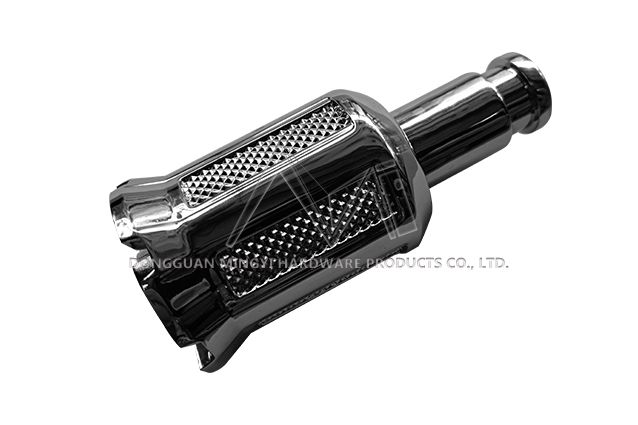
Zinc Alloy Die Cast Part
1. High-quality selection of die-casting mold materials;
2. Need to design a reasonable mold wall thickness and mold size;
3. Pay attention to roughing stress tempering;
4. Using appropriate heat treatment, casting zinc alloy mold, quenching speed is fast enough;
5. Thoroughly polish to remove EDM harassment quality layer;
6. No highly polished surface;
7. Minimize the use of aluminum content and speed up the injection;
8. To ensure proper cooling of the mold, the temperature of the cooling water must be maintained at 40 to 50 ° C;
When limited by the clamping force of the die-casting machine and the size of the mold, it is more suitable for production of small and medium-sized die-casting parts, but not for large-scale castings.
Have you ever encountered deformation problems in the manufacture of zinc alloy die casting? Do you know why it deforms and what is the solution?
First, the causes of deformation:
1. Poor casting structure;
2. The mold is opened too early, and the casting is not rigid enough;
3. Improper ejector setting and uneven force when ejecting;
4. When the gate position or gate thickness is too thick, it is easy to deform when the gate is cut;
5. Due to the local surface roughness, the resistance is large, and the product deforms when ejected; when the local temperature of the mold is too high, the product is not completely cured, and the force is large when ejected, causing the product to deform.
Second, the solution to the deformation:
1. Improve the casting structure;
2. Reasonably adjust the holding pressure and mold opening date;
3. Reasonably set the ejection position and the number of ejector rods, it is best to use 4 open spaces;
4. Change the position of the gate, make the gate have a point, reduce the thickness of the gate, in order to ensure the casting quality of the product, so that the product is not easy to deform when the gate is cut;
5. Zinc alloy die-casting strengthens the mold surface treatment to reduce the demolding resistance;
6. Control the local mold temperature and maintain the thermal balance of the mold.
Our company provides Zinc Alloy Car Remote Key Accessories, welcome to consult.
After the heat treatment of Die Casting Mould, corrosion and rust scars appear on the surface. The mold is prone to cracks after quenching and the mold is scrapped. The mold is rusted during use. The mold is left for a long time to cause rust.
1.Causes of mold surface corrosion and rust
The presence of more massive eutectic carbides indicates that the segregation of the raw material structure has not been improved. The purpose of the refinement process is to homogenize the structure. Quenching in regions with different compositions will also produce structural stress.
2.The reason that the mold is prone to crack after quenching
Poor spheroidizing annealing process, such as too high or too low annealing temperature, short isothermal annealing time, etc., can cause uneven spheroidizing annealing structure or poor spheroidization.
3. Die rust during production
During the use of the mold, rust occurs, which affects the aesthetics of the manufactured workpiece and even affects the quality of the workpiece. There are two main causes of mold rust, one is the mold material factor, and the other is the mold use environment factor.
4. Other conditions are rusty
If slag carbides adhere to the surface of the cavity, which causes rust of the mold, it should be removed in time; carbides precipitated and decomposed in the molding material often wear or corrode the mold. Once found, it should be immediately wiped with a dry cloth. If it is difficult to wipe, you can wipe it with a little alcohol.
Although the electroplated layer in the mold cavity is generally good for rust prevention, it is not completely effective. Sometimes corrosive gas can cause deep corrosion through the pores on the surface of the coating. The method to avoid corrosion of the coating is to wipe the mold frequently.
Cooling water in the mold easily rusts the mold. If the mold is cooled below zero, moisture in the air will form water droplets on the surface of the mold, and if not wiped, it will rust. Although condensation does not occur during the molding process, condensation will occur immediately after stopping the molding. It is best not to stop the molding during the production process. Even if it is stopped, the cooling water should be turned off and the mold surface should be wiped dry.
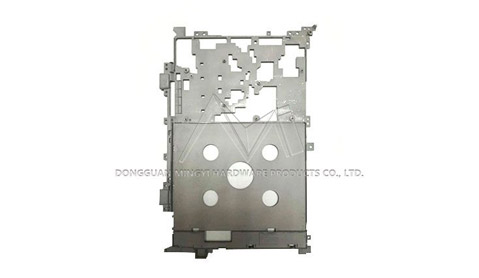
Magnesium Die Casting Parts
Next, I will share with you the Magnesium Die Casting Parts mold requirements:
1. The sliding parts such as the core-pulling mechanism and the guide device should be thoroughly cleaned, carefully checked and repaired. Relubricate with high temperature grease and assemble.
2. If there is a hydraulic core, the hydraulic part and the mold are repaired at the same time. Special attention should be paid to the cleaning of the hydraulic part to prevent pollution, otherwise, the hydraulic system of the die casting machine will be polluted.
3. When the mold fails or is damaged during the production process, the repair plan should be determined according to the specific situation. If necessary, perform comprehensive repairs as described above.
We are Metal Acceeeories Manufacturer, welcome to consult.

 Dongguan Mingyi Hardware Products Co., Ltd