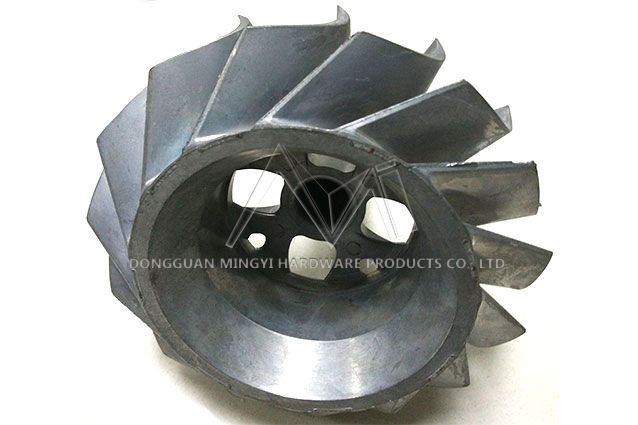
Reasons why Precision Aluminum Die Casting parts cannot be Anodized

Aluminum Alloy Die Cast Part Factory does not claim anodizing and plating of aluminum alloys. Precision Aluminum Die Casting parts are simple in appearances, such as angry lines, cold partitions, sand holes, and other shortcomings. Generally, the anode is changed to the material of aluminum extrusion type, and the plating is changed to zinc-aluminum alloy or zinc alloy. The so-called anodic oxidation of aluminum is an electrolytic oxidation process in which the appearance of aluminum and aluminum alloys is usually converted into an oxide film, which has maintenance, decoration and some other functional properties. The anodization of aluminum from this definition includes only the part of the process of forming an anodized film.
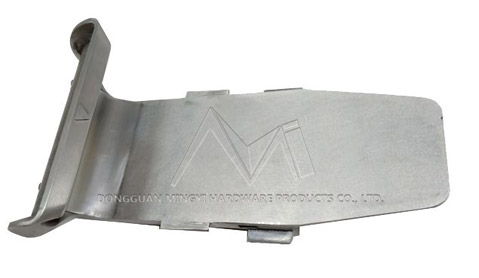
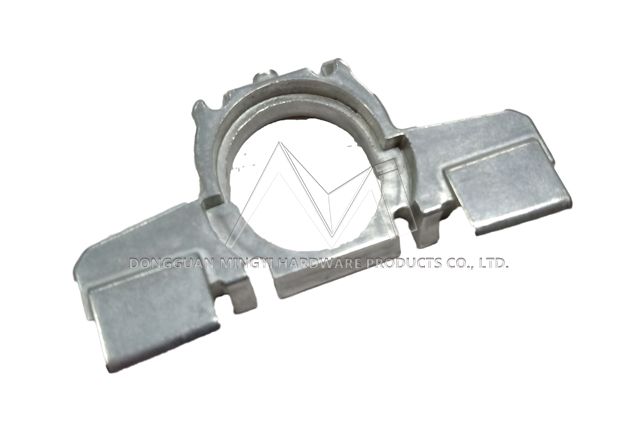
Precision Aluminum Die Casting parts

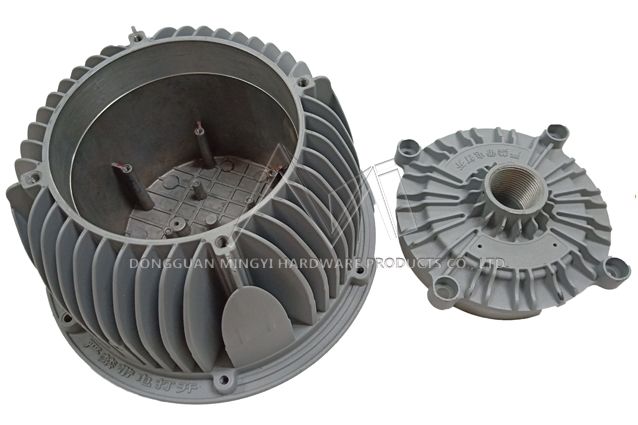
Precision Aluminum Die Casting parts

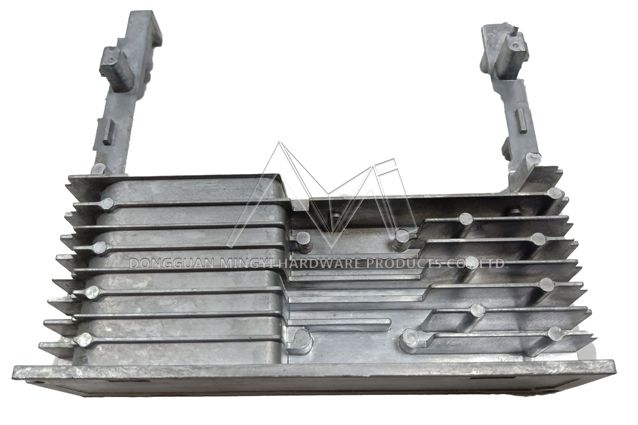
Die casting plating treatment

The metal or alloy article is used as an anode, and the outer surface thereof is made into an oxide film by electrolysis. The metal oxide film changes the appearance and function of the surface, such as appearance coloring, improving corrosion resistance, enhancing wear resistance and hardness, and maintaining metal appearance. For example, aluminum anodizing, aluminum and its alloys are placed in the corresponding electrolyte (such as sulfuric acid, chromic acid, oxalic acid, etc.) as an anode, and electrolysis is carried out under specific conditions and an applied current effect. The aluminum of the anode or its alloy is oxidized to form a thin layer of aluminum oxide having a thickness of 5 to 30 μm and a hard-anodized film of 25 to 150 μm. The anodized aluminum or its alloy improves its hardness and wear resistance up to 250-500 kg/mm 2, excellent heat resistance, and the hardness of the hard-anodized film is as high as 2320 K. Excellent insulation and resistance to attack The wearing voltage is up to 2000V, which enhances the anti-corrosion function and does not corrode in the salt fog of ω=0.03NaCl for several thousand hours. The oxide film has a large number of micropores in the thin layer, which can adsorb various lubricants, and is suitable for making engine cylinders or other wear-resistant parts; the membrane microporous adsorption ability can be colored into various beautiful and beautiful colors. Non-ferrous metals or alloys thereof (such as aluminum, magnesium and their alloys) can be anodized. This method is widely used in mechanical parts, aircraft parts, precision instruments and radio equipment, daily necessities, and construction.

The anodization of aluminum alloys in existing processes remains a challenge. For electroplating, some manufacturers can do it. Generally, a layer of zinc is first plated, then a copper plate is plated, and then electroplated. The cost is too high and the yield is low.

A general term for aluminum-based alloys. The primary alloying elements are copper, silicon, magnesium, zinc, manganese, and the non-essential alloying elements are nickel, iron, titanium, chromium, lithium, and the like. Aluminum alloy is one of the most widely used non-ferrous metal structural materials in the industry and has been used extensively in the aerospace, aerospace, automotive, mechanical, marine and chemical industries.

Our company specializes in Die Cast Machining Service. If you want to know more about our products, please stay tuned to our website or feel free to contact us.
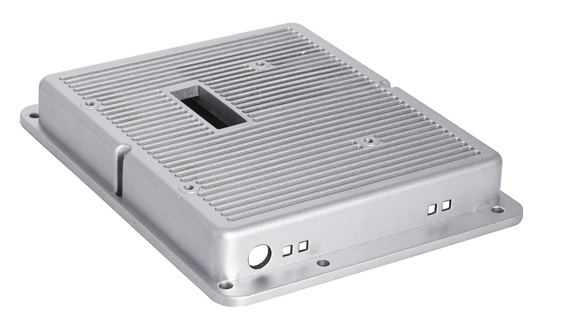
Why is Aluminum Alloy Die Cast Part mildewed?

 With the development of China’s economy, the die-casting aluminum foundry associated with it is also undergoing tremendous changes. Aluminum alloy die-casting parts have gradually increased with the automotive industry in China and the market for all die-casting aluminum castings are slowly expanding. China’s aluminum alloy die-casting industry is spreading to other economic markets, creating a bigger for China Die Casting Parts Factory. market. For the aluminum alloy die-casting parts to have a competitive advantage in the market, the experts of die-casting aluminum products tell us that the impact of Chinese cars on the international market is small, and the sales volume accounts for 90%. Foreign car companies use the Chinese market as their safe haven and invest in China’s economic market. In addition, motorcycles, ships, high-speed rail, and other industries have improved implementation and provided new advantages for the survival of China’s aluminum alloy die-casting casting industry. In foreign countries, the product price is 5-10 times that of the domestic market, and the manufacturing cycle is 2-3 times that of the domestic market. As far as these two points are concerned, China’s die-casting aluminum casting industry still has certain competitive advantages in the market.

  Since the aluminum alloy and the metal aluminum have good plasticity and fluidity and the casting process is cast in a pressure die casting machine, the aluminum alloy die casting can be made into various complicated shapes, and can also be made higher. The smoothness and precision greatly reduce the machining amount of castings and the casting allowance of metal aluminum or aluminum alloy, which not only saves electricity, metal materials but also greatly saves labor costs; while aluminum and aluminum alloys have excellent Thermal conductivity, small specific height, and heavy processability; thus aluminum alloy die castings are widely used in internal combustion engine production, automobile manufacturing, motorcycle manufacturing, electric motor manufacturing, electric power construction, oil pump manufacturing, Precision Aluminum Die Casting Parts, garden beautification, transmission machinery manufacturing, architectural decoration and other industries. Due to its light weight, easy forming and high strength, aluminum alloy die-casting parts are widely used in the machinery industry and some large-sized components with heavy weight requirements and complex shapes.

Aluminum Alloy Die Cast Part mildewed

Aluminum Alloy Die Cast Part

  The reason for mildew in Aluminum Alloy Die Cast Part:

  1. The environment in which aluminum die-casting products are preserved, temperature and humidity are suitable for mold growth;

  2. The surface of the aluminum die-casting product is mixed with super-sister material, which automatically absorbs moisture into the air to form a corrosive reaction of the primary battery, and creates an environment suitable for the growth of mold;

  3. Aluminum die castings due to the corrosion reaction of the primary battery, the alkaline compound is precipitated on the surface, the temperature and humidity are suitable after deliquescence, and the mold grows rapidly;

  4. Aluminum die castings The surface of the product has oils, plant fibers and other soils suitable for mold growth. Once the humidity temperature is suitable, the molds grow rapidly.

  Control method:

  1. Refining slag-removing agent containing sodium or magnesium salt, a refining agent using NaF component, or N2 gas refining;

  2. Do not use the release agent containing plant fiber, do not use the machine-containing machine to process the cutting fluid, and replace the oil-based anti-rust cutting fluid;

  3. The product cannot be stored in the open air for a long time, and the surface of the textile product is dusty;

  4. The product packaging carton stacked on the fascia should be wrapped with the wrapping film 6 to be waterproof. After the product is wet, it needs to be placed in the pass. The wind blows dry.

Aluminum alloy die cast products

Aluminum alloy heat sink mold

Description about Die Casting Mould

Industry ApplicationAluminum alloy heat sink mold
MaterialSKD61
Features1.Aluminum alloy die cast products have strong strength and hardness, stable size and goo interchangeability
2.Aluminum alloy die cast products has a long service life. which can realize mechanization and automation.
3.The ductility of aluminum alloy die cast products are very good and can be produced for castings with very thin walls.
ProcessAluminum Alloy Die Casting Mold
Tolerance grade+—0.05mm
Surface treatmentDesalination and heat treatment

Die Casting Mould Components

Description about Die Casting Mould Components

Industry ApplicationDie Casting Mould
MaterialSteel SKD61
Features1.High hardness and high temperature resistance.
2.High processing precision and stable product formation.
3.The mold has a long life.
ProcessCNC
Tolerance grade+—0.05mm
Surface treatmentHeat treatment
Quality control1.Mould oil road, smooth water transport.
2.The core is not repaired and welded.
3.Inserts, sliders, and thimbles are assembled.

Our Custom Die Casting Mould includes Aluminum Alloy Die Cast Part, Magnesium Alloy, Zinc Alloy, etc. It provides all-round production services from the design and development of mould to the forming and post-processing of die-casting products and surface treatment.

Clean Up the World!

Do you know? Every September 14th is World Earth Clean Day. World Cleanup Day is an international social initiative dedicated to addressing the world’s land-free waste and marine debris issues by affecting changes in human behavior patterns.

Clean Up the World!

It is everyone’s responsibility to love the earth. The earth is the home of our common life, but human activities have caused serious damage to the earth. Littering causes serious environmental pollution, discharges of sewage, and destruction of water resources. 

As an Aluminum Alloy Die Cast Part Factory, we pay great attention to the cleanup of garbage in production and life. We hope that the concept of “protecting the environment and protecting the earth” is like a seed, sprouting, sprouting and growing up in everyone’s heart.

The Most Common Quality Problems with Zinc Alloy Die Cast Part

What are the most common quality problems in the production of zinc alloy die casting? As a Die Casting Mold Supplier, let’s analyze it.

When Custom Die Casting Mould is limited by temperature, it will cause the melting point of some alloys to be too high, and the living surface of the matching die-casting mold will be shortened, which will lead to high cost. Now it is generally used to produce die-casting parts mainly with zinc alloy. Metals such as aluminum alloys, magnesium alloys, and copper alloys are limited in the types of die-cast alloys.

Zinc Alloy Die Cast Part

Zinc Alloy Die Cast Part

At high temperatures, the gas in the pores will swell and eventually cause bubbling on the surface. The lighter is only a small bubble, and in the worst case, it affects the appearance of the Zinc Alloy Die Cast Part and reduces the overall quality of the product. Therefore, the device is not suitable for working at high temperatures, or pores may appear on the surface.

When it is limited by the clamping force of the die casting machine and the size of the die, it is more suitable for production with small and medium-sized die-casting parts and is not suitable for large-scale castings.

The above is the quality problem of Zinc Alloy Die Cast Part. I hope this article can help you.

How to Choose a Casting Method?

What is casting, casting is the method of casting liquid metal into a casting cavity that is compatible with the shape of the part, after cooling and solidifying, to obtain a part or blank. The method of casting is also principled. As an Aluminum Alloy Die Cast Part Factory, let’s analyze it together.

First, the preferred method is sand casting, because sand casting has low cost, simple process and short production time; sand casting is divided into two types: clay wet type and the other type clay dry type; What is the difference? The clay wet type can be produced in a few kilograms up to several tens of kilograms, and the clay dry type can be produced up to several tens of tons;

Custom Precision Die Cast Parts

Custom Precision Die Cast Parts

Second, low-pressure casting, die-casting, centrifugal casting and other casting methods: because the equipment and Custom Die Casting Mould are relatively expensive, so the method is only suitable for mass production;

Third, the core molding method: the production of large machine tools and other castings used, this method does not make the appearance and sandbox, the core in the pit;

Our company specializes in providing Custom Precision Die Cast Parts. If you need it, please feel free to contact us.

How to Check if the Aluminum Die Casting is Qualified?

It is not that professionals do not know whether aluminum die castings are qualified or not, and they are often afraid of being deceived. Today, professionals from China Die Casting Parts Factory will talk about how to verify the qualification of aluminum die castings:

First, it must be a complete individual, there must be defects such as defects, cracks, bubbles, etc., and there should be no mold phenomenon.

Second, Custom Precision Die Cast Parts should be wiped frequently, such as gates and flashing edges, and kept clean at all times.

Aluminum Alloy Die Cast Part

Aluminum Alloy Die Cast Part

Third, the defects that cannot be seen on the processed surface are mixed with impurities, and the pores are sparse.

Fourth, the level of processing marks at the Aluminum Alloy Die Cast Part ejector shall not exceed 0.2 mm.

The above is the way to check if the Aluminum Alloy Die Cast Part is qualified, I hope to help you.

Three Major Polishing Methods for Die Casting!

Polishing is required for the completion of die casting. What is polishing? Polishing refers to the processing method of reducing the surface roughness of a workpiece by mechanical, chemical or electrochemical action to obtain a bright and smooth surface. It is a modification process of the surface of the workpiece by using polishing tools and abrasive particles or other polishing media. There are many ways to polish. Aluminum Alloy Die Cast Part Factory talks about three of the various polishing methods.

First, mechanical polishing

Mechanical polishing is mainly a polishing method in which a smooth surface is obtained by cutting or plastically deforming the surface of the material to remove the convex portion of the surface of the workpiece. In the polishing liquid containing abrasive, it is pressed against the machined surface to perform the high-speed rotary motion. With this technology, the surface roughness of about 0.008 μm can be achieved, which is the best surface roughness in various polishing methods. This method is often used in optical lens molds. Mechanical polishing is the main method of mold polishing.

Custom Precision Die Cast Parts

Second, electrolytic polishing

The basic principle of electropolishing is the same as chemical polishing, which is to selectively dissolve the surface of the material to make the surface smooth. Compared with chemical polishing, it can eliminate the influence of the cathode reaction and has a good effect.

Third, ultrasonic polishing

Ultrasonic polishing is a processing method that uses a tool section for ultrasonic vibration to polish a brittle hard material through an abrasive suspension. The workpiece is placed in an abrasive suspension and placed together in an ultrasonic field, and the abrasive is ground and polished on the surface of the workpiece by the action of ultrasonic waves. Ultrasonic machining has a small macroscopic force and does not cause deformation of the workpiece, but it is difficult to manufacture and install the tooling.

Our company specializes in providing a variety of Custom Precision Die Cast Parts, if you need it, please feel free to contact us.

Reasons for the Blackening of the Surface of Aluminum Alloy Die Castings

What causes the surface of aluminum alloy die-casting to become black? There are many reasons for the surface to blacken. The Die Casting Parts Supplier will give you an analysis:

1. The process design of the die casting is unreasonable, and improper handling during cleaning will result in mold casting. Moldy is the condition that causes the blackening of the die-casting part, and the accelerated mildew will turn black;

2. There is also a position where the die-casting part is not placed high enough because the more it touches the ground, the more humid it is. If the surface of the die-casting part is long, there will be moisture, which will cause the mold to eventually turn black.

Aluminum Alloy Die Cast Part

3. Because Aluminum Alloy Die Cast Part does not work well during processing, it does not do any cleaning or simply rinses with water and does not completely clean it. This will cause corrosive substances such as a stripper to remain on the surface of the die-cast aluminum, which will eventually lead to mildew and blackening of the die-casting parts;

4. There is also aluminum that is a reactive metal that oxidizes or molds at a certain temperature and humidity and eventually turns black. There is also the improper use of the cleaning agent. When selecting the cleaning agent, it is best to avoid corrosiveness, otherwise, it will lead to blackening.

The above is the reason for the blackening of the Precision Aluminum Die Casting Parts surface, I hope to help you.

通过 WordPress.com 设计一个这样的站点
从这里开始